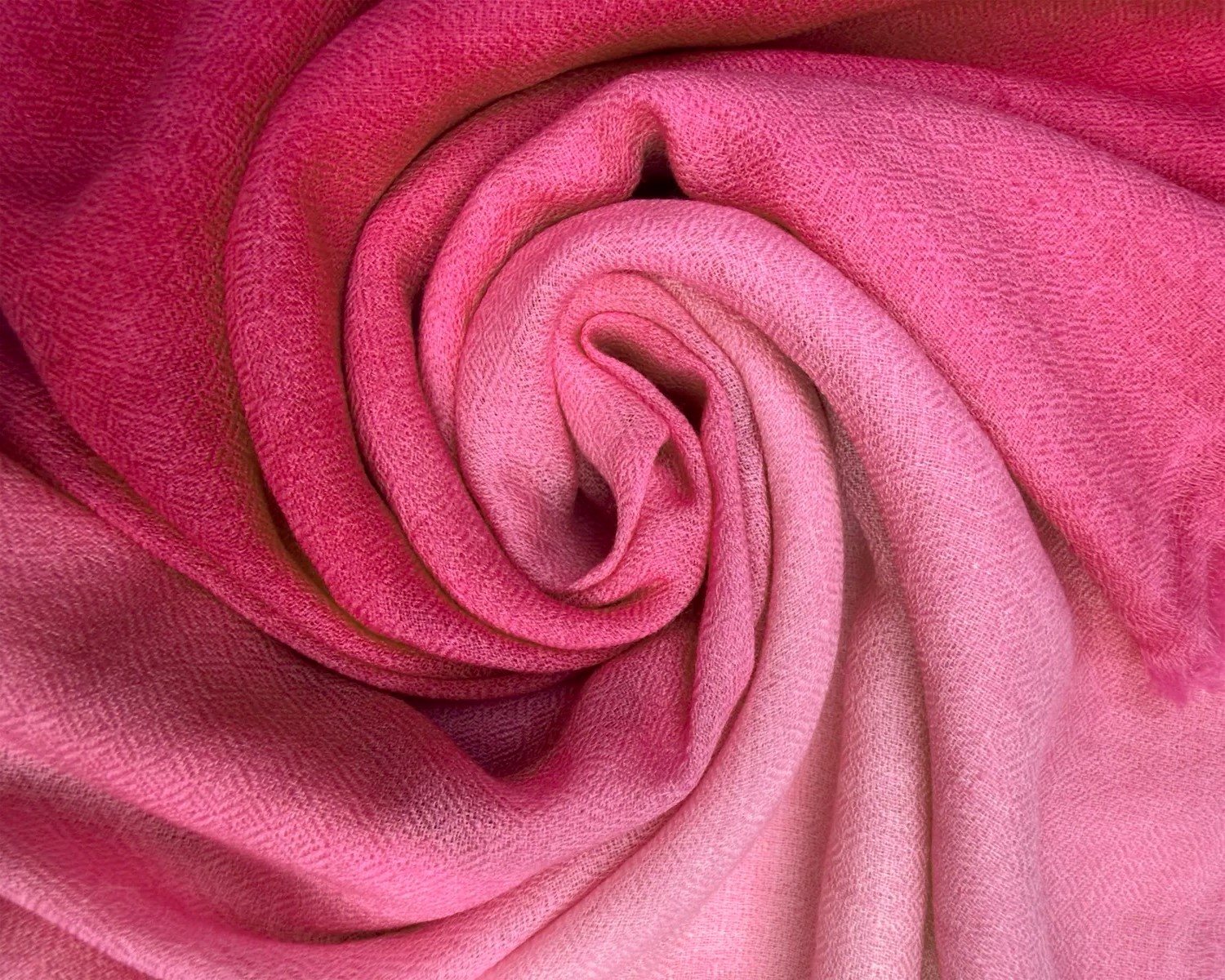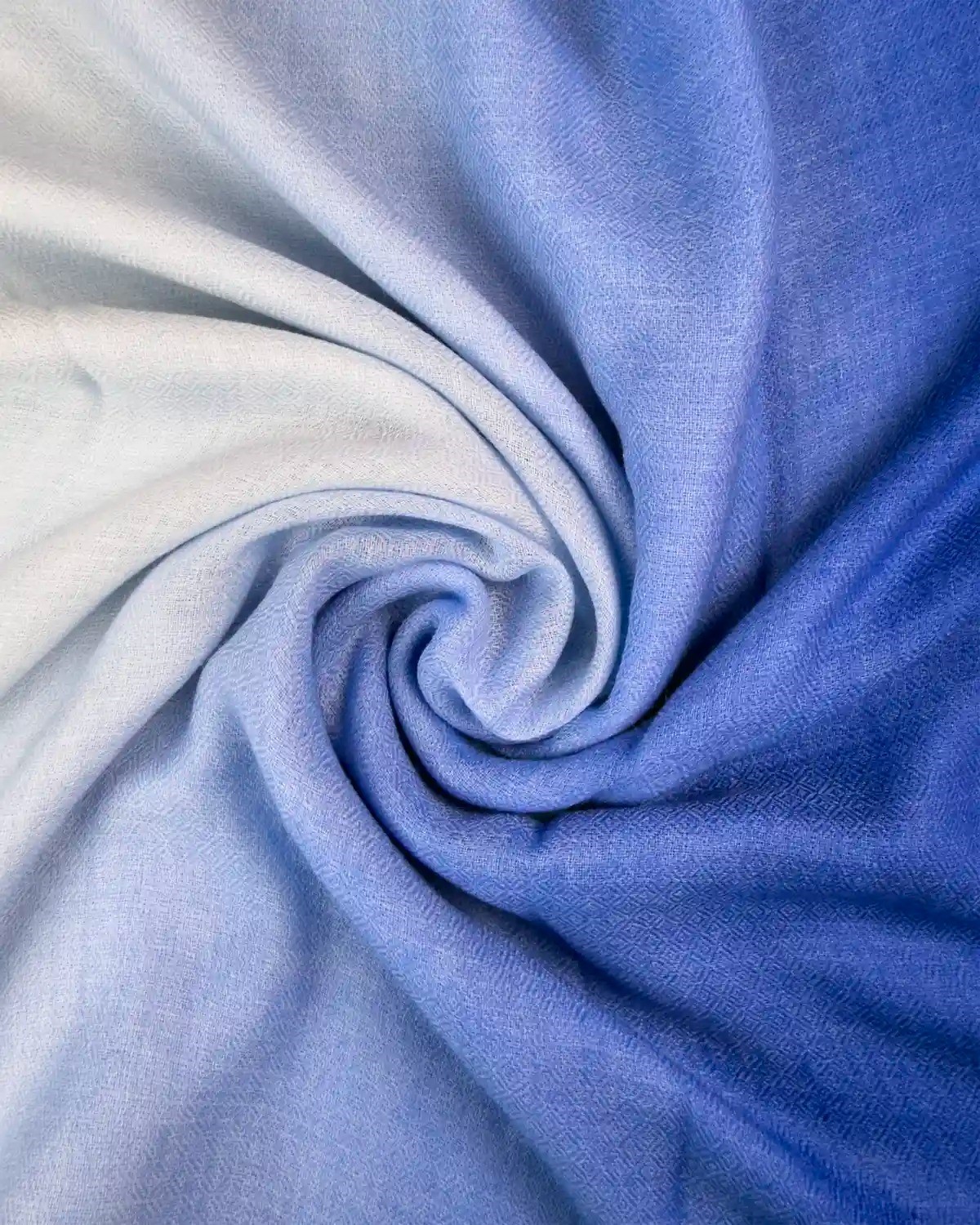
Walk into any luxury textile market — from Florence to Tokyo — and you will hear the words "cashmere" and "pashmina" used almost interchangeably. Vendors drape soft shawls over their arms and promise you the finest fiber in the world. But here's the truth: cashmere and pashmina are not exactly the same thing, and understanding the difference can save you from overpaying — or from missing out on something truly special.
What is Cashmere?
Cashmere comes from the soft undercoat of cashmere goats — primarily the Capra hircus laniger breed — raised across a broad range of high-altitude regions including Mongolia, China, Iran, Afghanistan, and Nepal. Each spring, the fine undercoat is combed or sheared from the goat, then cleaned, dehaired, and spun into yarn.
The finest cashmere fibers measure between 14 and 19 microns in diameter. The lower the micron count, the softer and more valuable the fiber. For reference, human hair averages around 70 microns — so cashmere is extraordinarily fine.
"True cashmere doesn't just feel soft — it feels like nothing at all. That's when you know you're holding something extraordinary."
What is Pashmina?
Pashmina is a specific type of cashmere — and arguably the finest type in the world. The word "pashmina" comes from the Persian pashm, meaning "soft gold." It refers exclusively to the fiber harvested from the Chyangra goat (Capra hircus), which grazes at altitudes above 14,000 feet in the Himalayan regions of Nepal, Tibet, and Ladakh.
Because of the extreme altitude and cold, the Chyangra goat develops an exceptionally fine undercoat — typically measuring between 12 and 16 microns. This is finer than most standard cashmere. The fiber is never sheared; it is hand-combed from the animal during the spring moulting season, collected by hand, and cleaned without harsh chemicals.
🐐 Key fact: One Chyangra goat produces only about 80–170 grams of usable pashmina fiber per year. A single shawl requires fiber from three to five goats — which is why authentic pashmina commands its price.
The Key Differences at a Glance
- Source animal: All pashmina is cashmere, but not all cashmere is pashmina. Pashmina comes only from the Chyangra goat of the high Himalayas.
- Fiber fineness: Pashmina averages 12–16 microns; standard cashmere averages 14–19 microns. Finer means softer.
- Altitude: Chyangra goats live above 14,000 feet. The extreme cold produces the finest, densest undercoat.
- Harvesting method: Pashmina is always hand-combed, never sheared. This preserves fiber length and quality.
- Weight and feel: Authentic pashmina is lighter than cashmere yet warmer — a paradox that makes it so coveted.
- The ring test: A genuine pashmina shawl is fine enough to pass through a finger ring. Most cashmere shawls are not.
Why Does This Matter When You Buy?
The global market is flooded with products labelled "pashmina" that are actually cotton, acrylic, or low-grade wool blends. Because the word "pashmina" has no internationally protected designation of origin (unlike, say, "Champagne"), it is widely misused.
At Scarf Bliss, every product is labelled with its exact fiber content and sourcing. Our pure pashmina range uses only verified Chyangra fiber from Nepal's high Himalayan belt, hand-combed and hand-loomed in Lubhu by artisans who have worked with this fiber for generations.
How to Spot Genuine Pashmina
When shopping for pashmina, look for these signs of authenticity:
- Ask for the fiber content — it should say "100% Pashmina" or specify Chyangra cashmere.
- Check the weight — a genuine pashmina shawl (80×200cm) should weigh around 100–150g. Heavier usually means blended.
- Try the ring test — slide the shawl through a finger ring. If it passes, it's exceptionally fine.
- Burn test — if you can pull a small fiber, genuine pashmina burns like hair (slow, self-extinguishing, smells like burnt hair). Synthetic burns fast and smells of plastic.
- Ask where it was made — authentic Nepali pashmina comes with a story. If the seller doesn't know, that's a red flag.
Our Recommendation
If you are buying for personal use and want the absolute finest experience, opt for our Ring Pashmina Stole — the pinnacle of the Chyangra fiber range. If you are sourcing for wholesale or boutique retail and need a product with broad appeal and a more accessible price point, our Classic Cashmere Shawl delivers outstanding quality and consistency.
Both are made with the same commitment: ethical sourcing, transparent supply chains, and the unmistakable warmth of the Himalayas.
Wholesale inquiries welcome. Export-grade quality, ethical sourcing, MOQ from 20 pieces.